2026 Late summer
Our planned trips for the summer of 2026 had to be cancelled due to a ruptured Achilles tendon followed by surgery (Ernst) and two cataract surgeries (Sylvia). At the end of August, we finally are setting off on a short trip, this time to Belgium.
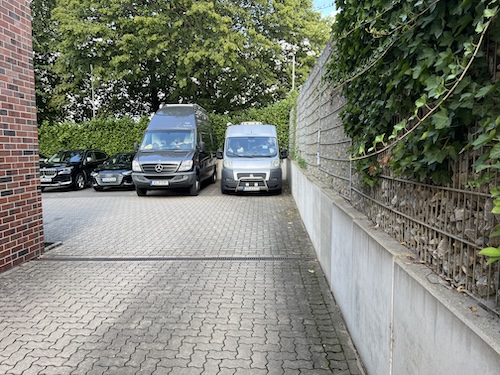
We spend the first night in Germany, in Coesfeld, where the ‘Brauhaus Stephanus’ offers overnight accommodation for small motorhomes, as long as the driver (and co-pilot) make use of the restaurant.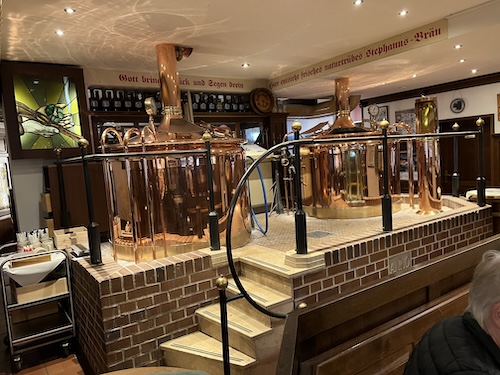
So we’ll be able to eat out there, with the option of having a truly local beer.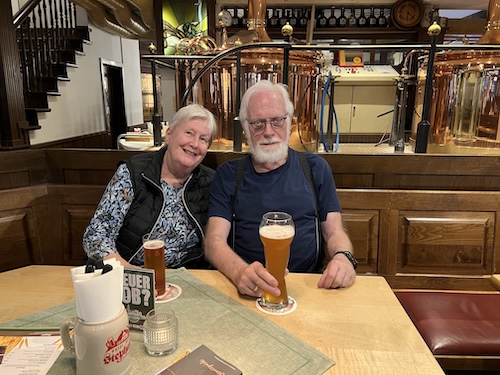
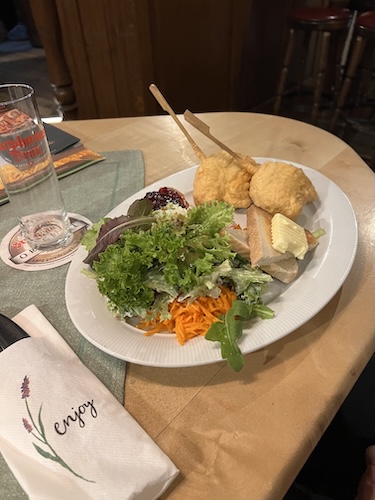
Camembert baked in beer batter for Sylvia.
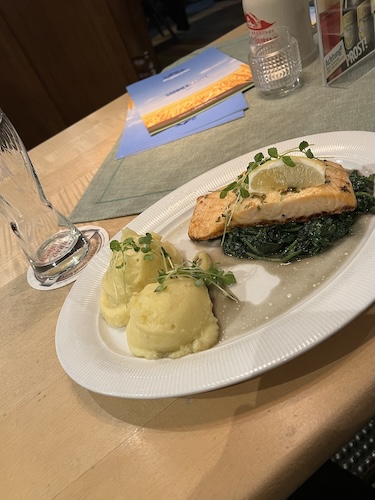
Salmon with spinach and delicious mashed potatoes for Ernst.
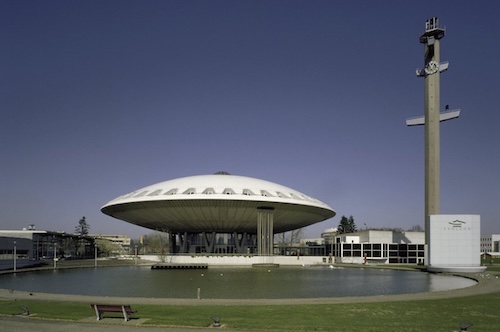
photo: Wikipedia Commons
The next day, we visit the Evoluon in Eindhoven. Ernst had been there once, some 50 years ago, but Sylvia had never been.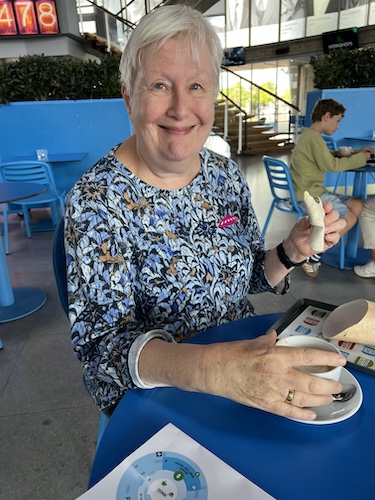
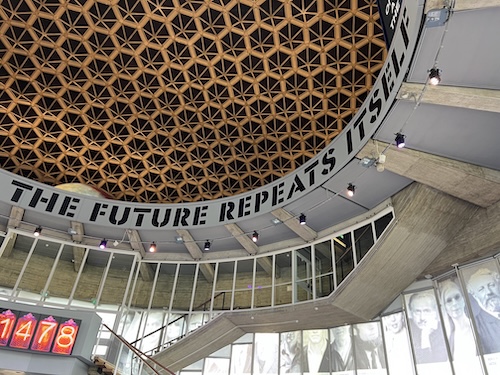
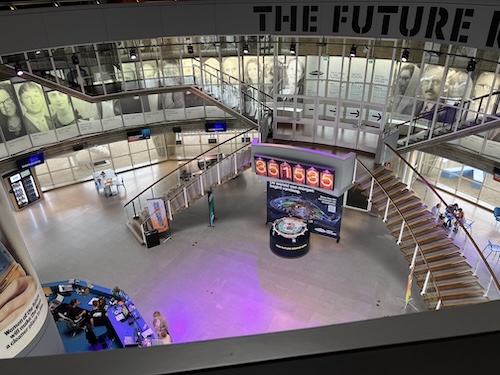
After lunch, we visit the exhibition. Sylvia is very sensitive to light following her operations, so we don’t stay there for very long.
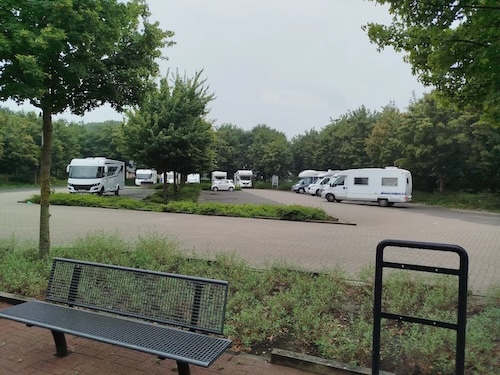
photo: Roland Müntefering
From Eindhoven it's only 69 km (43 mi) to our next stop, the motorhome site in Grobbendonk, where we’ve slept several times before.
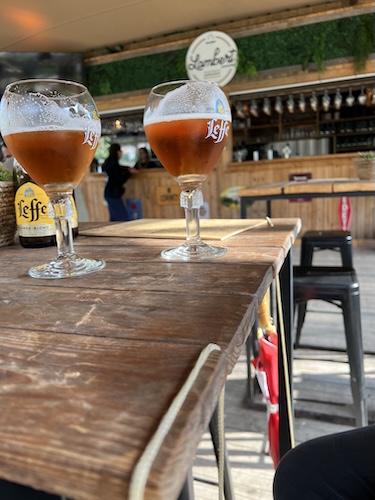
No more driving today, so we enjoy a Belgian beer on a nearby terrace. An option they don't offer in Germany....
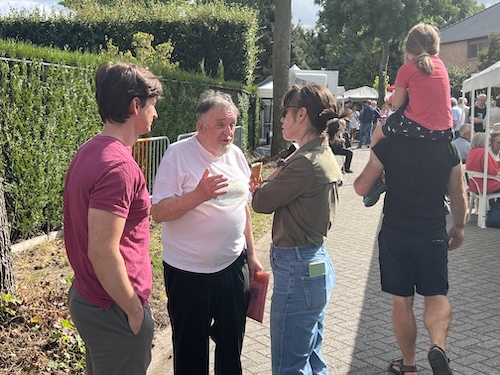
The aim of our trip is the party on Saturday in Broechem, not too far away, to celebrate the 80th birthday of Clement, whom we know from our time in Belgium.
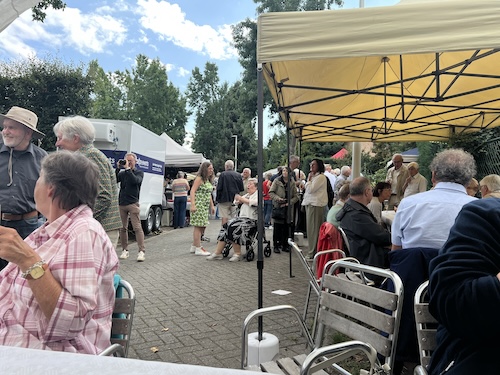
The birthday boy really went all out.
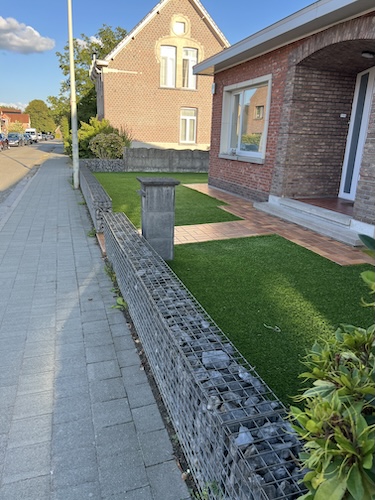
An extremely neat little Belgian garden with an artificial lawn!
We spend the night near Brecht on a motorway car park, so that on Sunday we can meet daughter Judith at a service station for a cup of coffee. She’s on her way to Breda, and we’re heading home, so our paths cross.
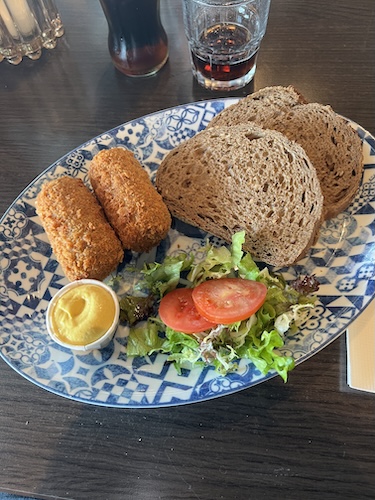
Later on, we have a lunch of Dutch veal croquettes and an sorbet ice cream at a former Routiers restaurant near Nunspeet. We haven’t eaten out all summer, so we’ve got some catching up to do :-)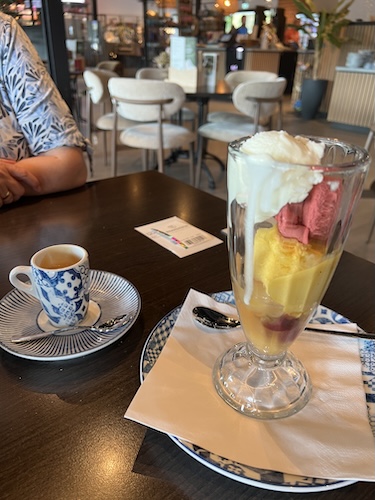
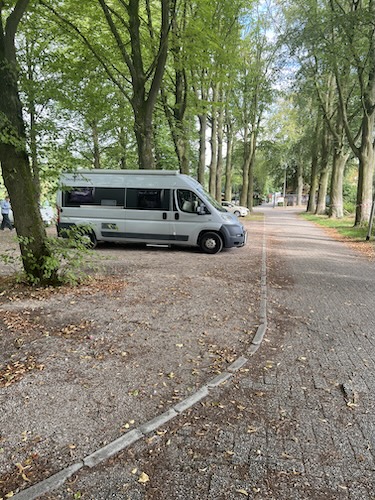
The next night we spend in Nijverdal. The spot is mentioned in the Bordatlas. The locals there knew nothing about it, but they were happy for us to stay the night – wonderfully peaceful.
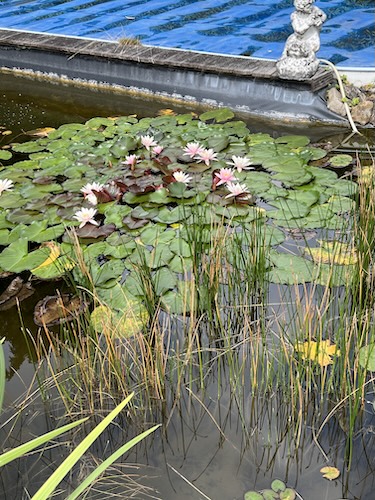
When we got home, the water lilies were in full, beautiful bloom.
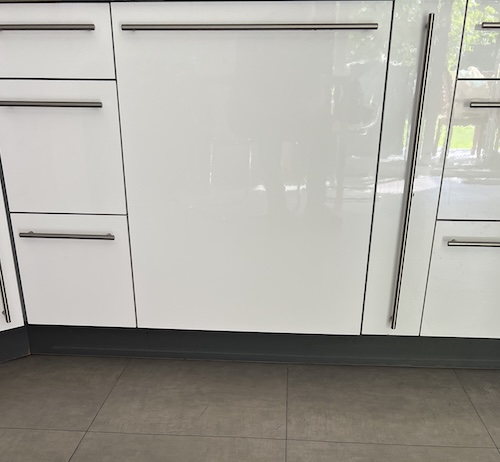
Not long after that, the dishwasher’s pump stopped working. We’ve no idea how old the dishwasher is, but it clearly needs replacing. After a bit of searching, we found one that fits the size of the cover door. Ernst fitted it in, and the dishes are now noticeably cleaner than before.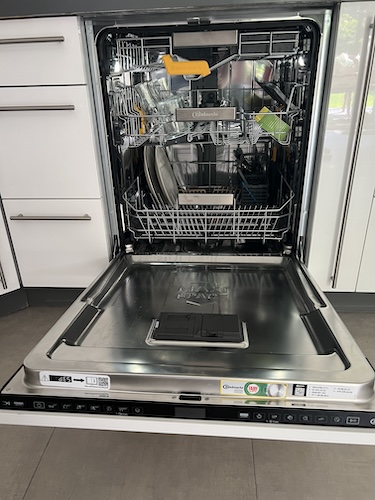
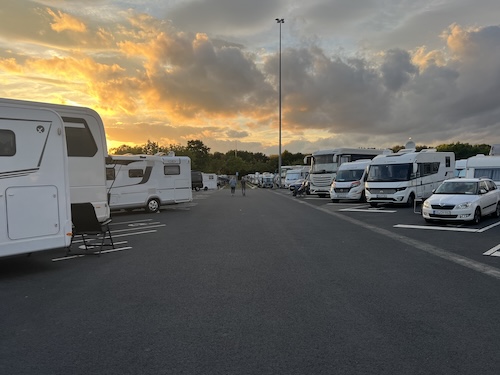
Our next little trip takes us first to the Caravan Salon in Düsseldorf. On arrival (which these days isn’t allowed until 7 pm), it’s still a lovely warm summer’s evening. So we walk across the car park to the big marquee, where we – yes indeed – have a big beer.
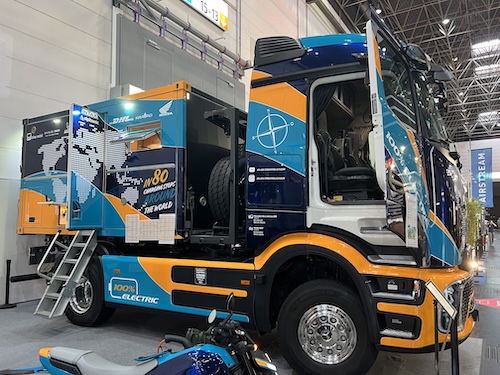
We didn’t see a great deal of anything new, but this all-electric Mercedes was certainly something special. You’d need a hefty bank balance to afford it, though. And we did meet Wolfgang and Anja from Bodenheim which was a nice surprise!
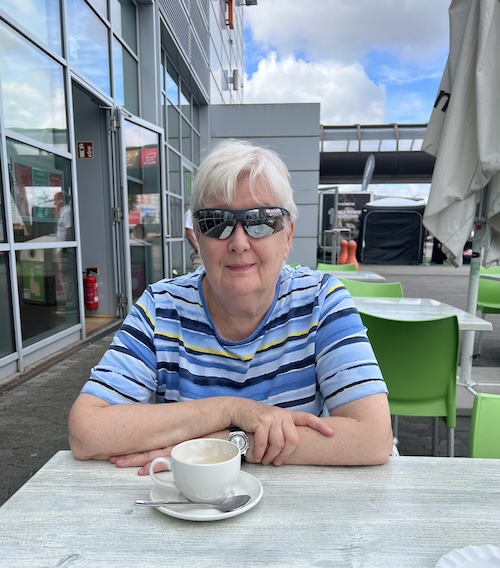
The weather’s still lovely, so we have a drink outside. The sunglasses (bought for a few pennies at Lidl) protect Sylvia’s eyes.
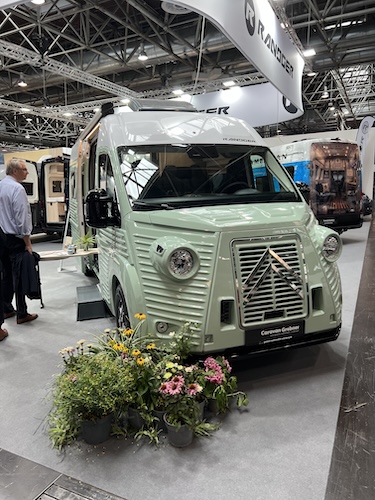
This new Citroen evokes a sense of nostalgia. It is the successor to the famous HY (1947-1981).
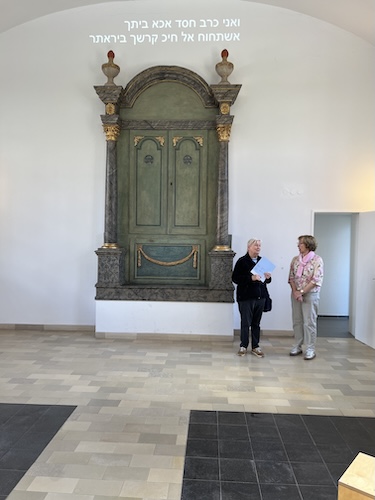
The next day on our way to Hoogeveen, we visit Coesfeld again. Today, for a change, the former synagogue is open… The text above the Ark contains quite a few errors. Ernst will later have an extensive correspondence on the matter, as the museum responsible for managing the synagogue is grateful for the report of the errors and the assistance in correcting them.
We spend the night at the motorhome site in Hoogeveen and have dinner at the nearby Balkan restaurant "Ohrid".
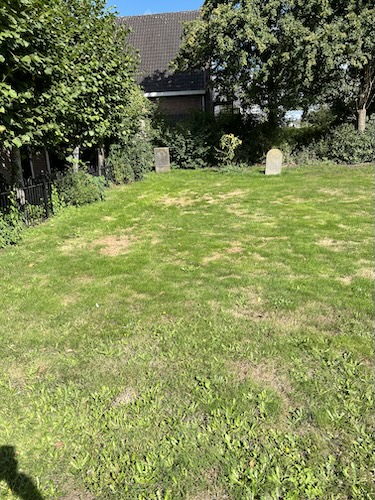
The next day, there is a tour of Jewish Hoogeveen, organised by Jewish Welfare’s Platform for Jewish Heritage and Identity. Near the restaurant where we meet, we come across the remains of the old Jewish cemetery.
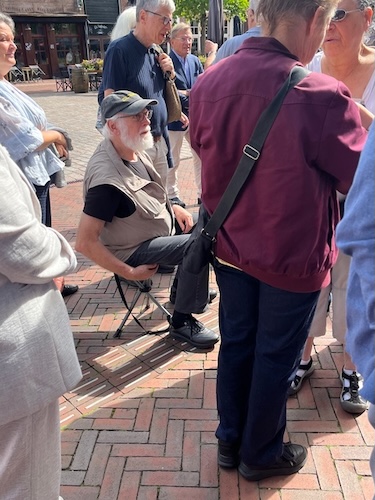
After lunch, there is a guided walking tour of the town. As a precaution, we bought a portable stool for Ernst, and it’s proving very useful.
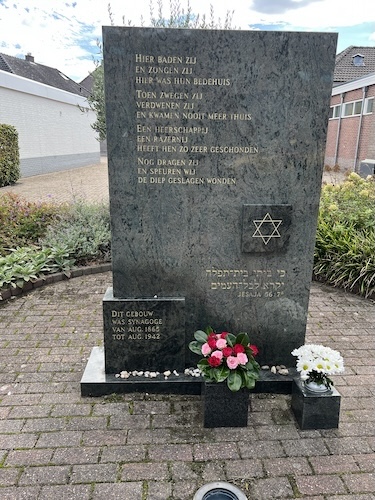
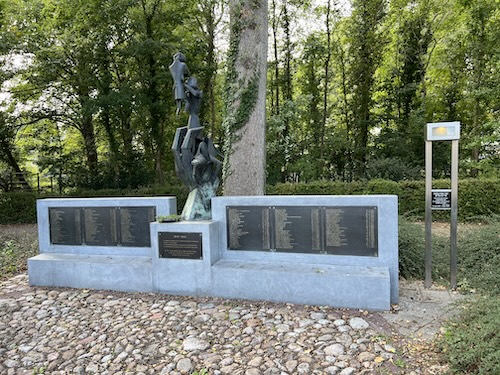
Monument to the Jewish residents of Hoogeveen, perished in the Shoa.
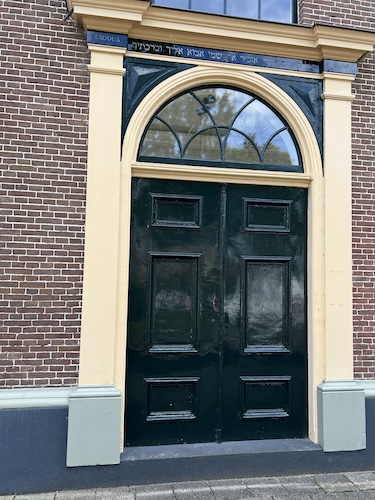
The former synagogue, now a Baptist church.
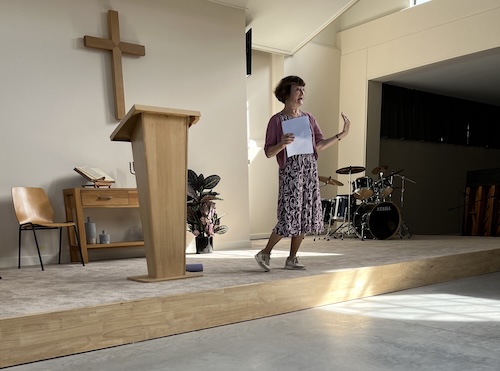
Here, Henny van het Hoofd gives a talk on Jewish religion teachers in Hoogeveen, the subject of her PhD thesis. Ernst, one of her former students, has known her for about 35 years and their reunion is a warm one.
Finally, a visit to the newer Jewish cemetery.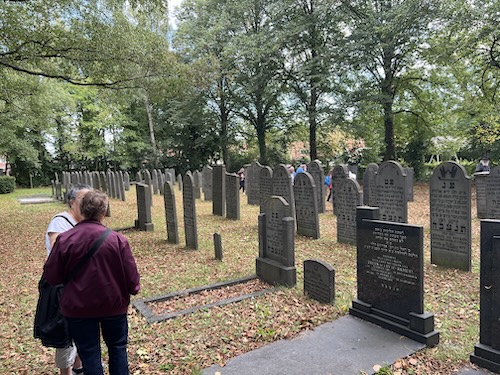
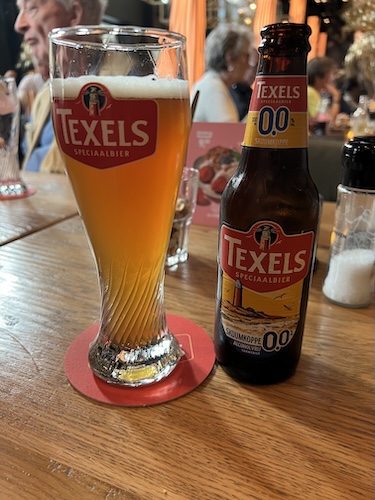
Afterwords the participants chat over a drink in the restaurant. This time we are opting for a non-alcoholic beer, as we’ll be driving home afterwards.
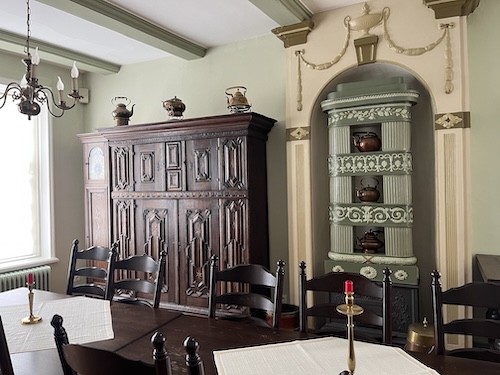
A week later, it’s Sylvia’s birthday. We take a day trip to nearby Leer, starting with the Heimatmuseum.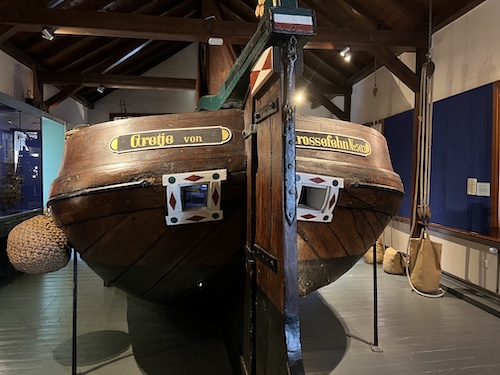
We’re given a guided tour about herring fishing in Leer.
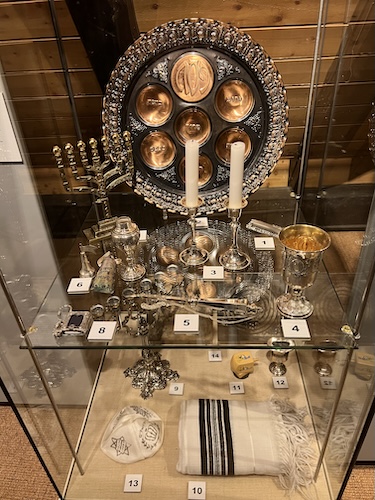
There’s also a small section on Jewish history,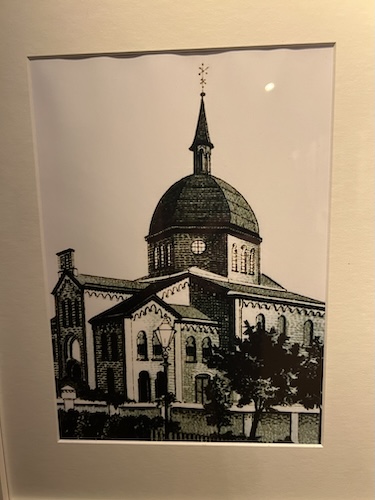
including, among other things, the well-known picture of the synagogue in Leer, which was destroyed on 9 November 1938.
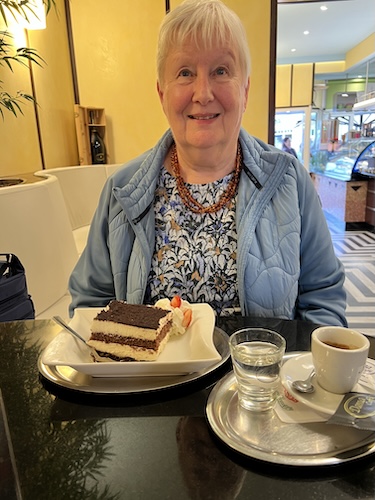
In search of a late lunch, we end up at an Italian ice-cream parlour with tiramisu and espresso for Sylvia and a chocolate ice cream for Ernst.
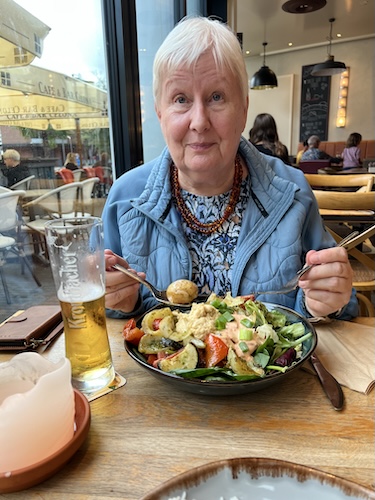
It’s also Open Monument Day, so we visit the open day at the Zollhaus (former customs building) and a painting exhibition at the Alte Packhaus (old warehouse) on the Ostersteg. The day ends with a meal at Celona.
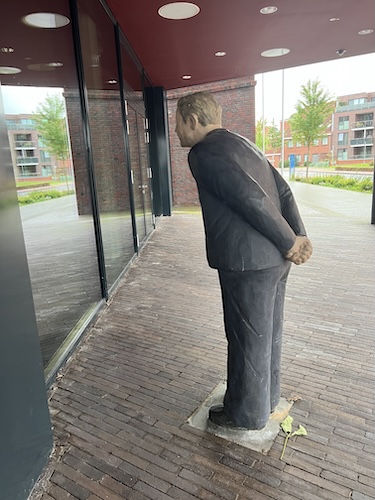
We’ve parked our car at the Sparkassenforum, where we’ll need to go again a few days later. This gentleman is already waiting to be let in ;-)
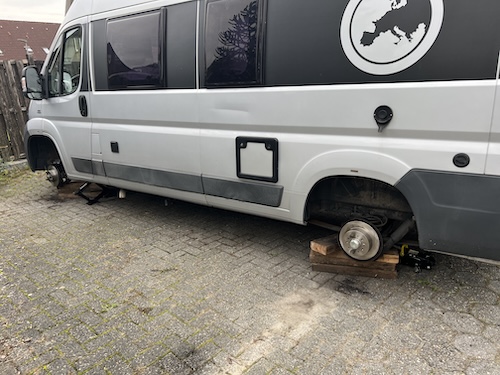
Ernst is finally getting round to renewing the van’s brakes, a job he’d had to put off for months due to his Achilles tendon surgery.
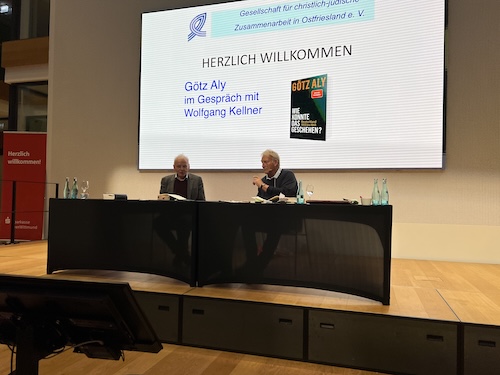
A lecture by Götz Aly at the Sparkassenforum, attended by around 250 people. The lecture was organised by the local society for Christian-Jewish dialogue, of which Ernst is a board member.
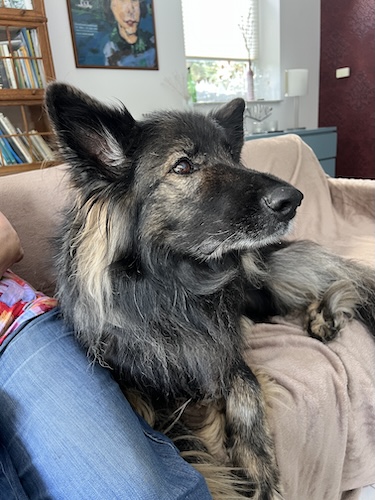
On the way to Bremen, José and Blitzen pop in for a quick visit.
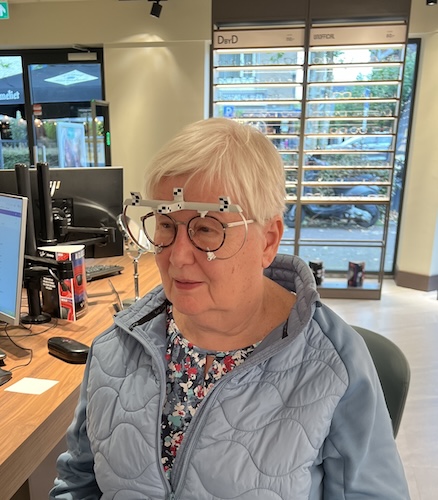
Following her latest check-up with the ophthalmologist, Sylvia can finally go and choose two new pairs of glasses. Here, the correct positioning of the lenses in the sunglasses is being determined.
Ernst thinks she looks like a crash-test dummy with those blocks.
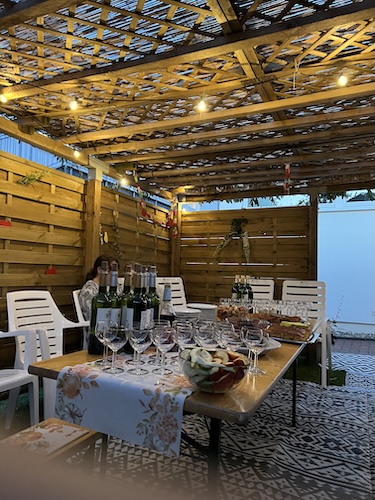
The High Holy Days come to a close in the sukkah in Oldenburg.
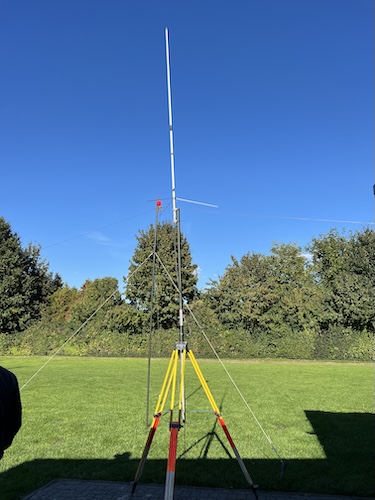
On October 4th, the local branch of the VFDB, the amateur radio club for (former) employees of Post and Telecom, organised a field day. Antennas were set up for SW, as well as for VHF and UHF. Contacts were made with other stations, both near and far, but above all, there was plenty of friendly chatter. After a group pizza meal, everything was dismantled and packed away, and by sunset the youth centre looked as though nothing had happened that Sunday...
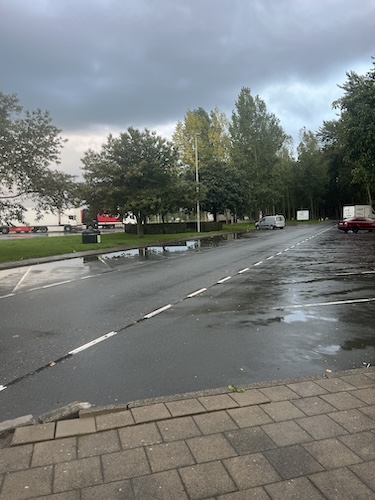
Our next campervan trip takes us to Leek, where Sylvia’s new glasses are waiting for her. After spending three months without glasses (for the first time in 65 years) following two cataract operations, it’s a relief in one respect (being able to see clearly), but at the same time it’s a process of adjustment that may take quite some time.
We spend the night in the car park at Hajé De Aalscholver, 3 to 4 metres (10 to 13 ft) below sea level.
Judging by the weather, summer is over. Could that really be true...?
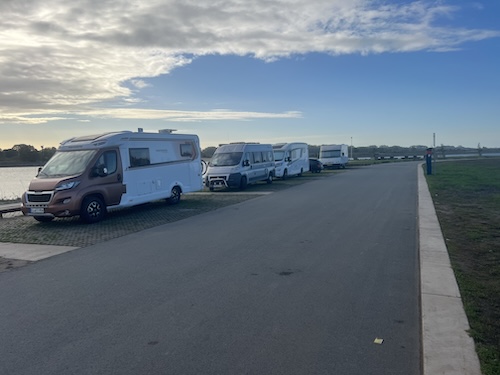
Our next stop is in the fruit-growing town of Tiel, on the River Rhine (which is known locally as the Waal).
There’s a lovely pitch with a view of the river.
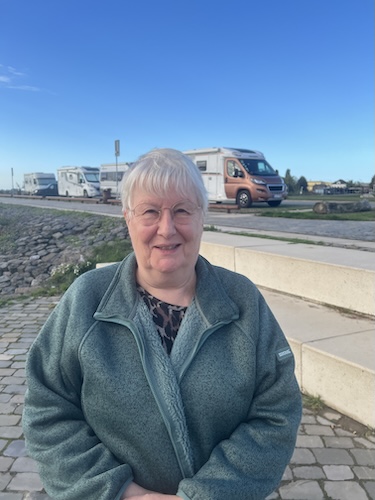
For Sylvia and her glasses, the real test is only just beginning.
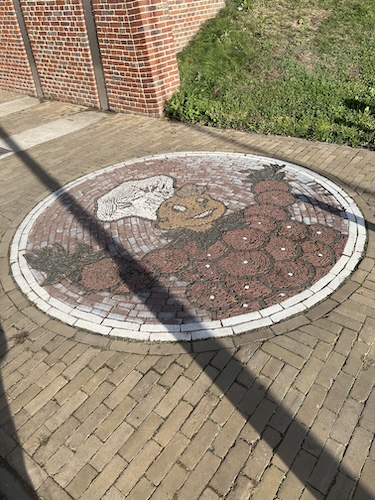
Anyone in the Netherlands who ever had jam on their bread in the 1950s will be familiar with Flipje, who had been the mascot of the local jam factory since 1935 and later became the mascot of the town of Tiel.
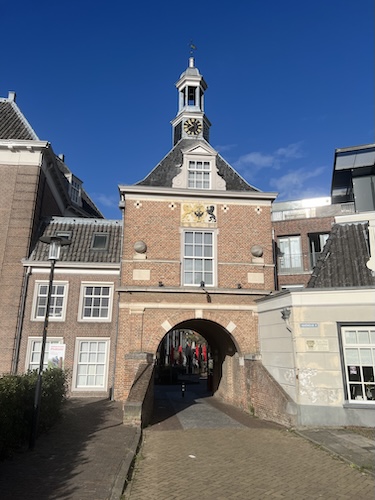
Flipje even has his own museum, housed in the local Gentlemen’s Club and the Waterpoort, which originally dates from 1647, was destroyed during the war and rebuilt in 1979.
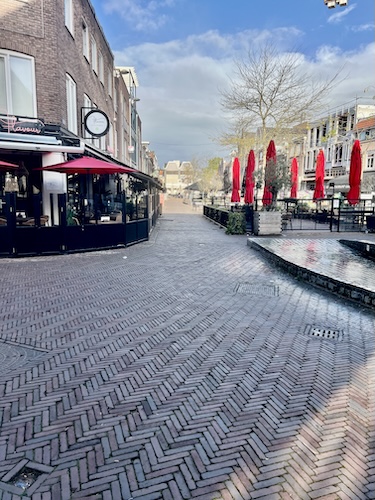
The market square (with plenty of restaurants and cafés) was once Tiel’s inner harbour, until it was filled in in 1646.
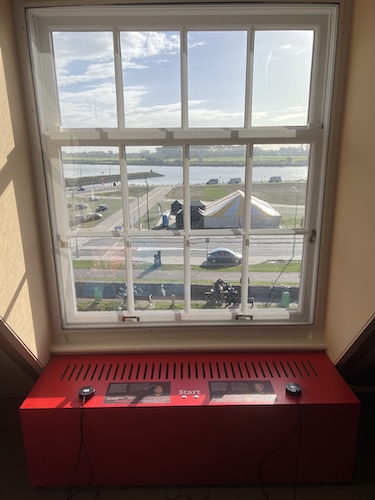
In the fifth-floor room of the museum, we are treated to some fascinating presentations on Tiel’s centuries-long Jewish history. After all, the event is once more organised by Jewish Welfare’s Platform for Jewish Heritage and Identity.
We can keep an eye on our van from a window.
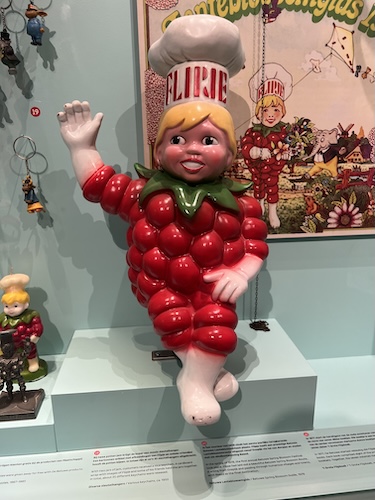
And, of course, Flipje is everywhere here too.
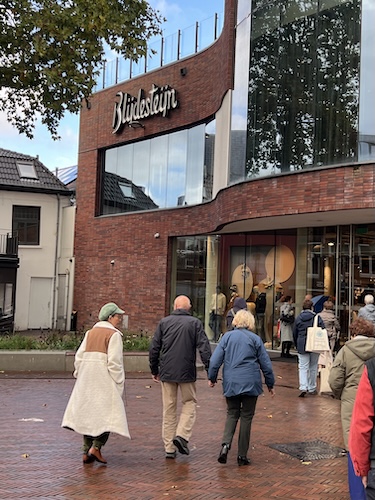
Amidst the autumnal showers, we walk to the Blijdesteijn fashion house. The father of the current three directors gives a captivating presentation on the company’s past, present and future.
This magnificent warehouse has its origins in the two brothers who fled to the Netherlands in 1820 to escape pogroms and earned a living as pedlars, travelling from farm to farm.
The business is now run by the sixth generation of the family.
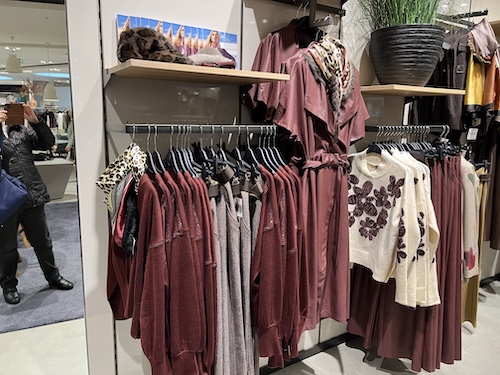
Blijdesteijn is one of the country’s top ten largest independent shops and attracts over 300,000 visitors every year, many of which drive a few hours to be able to do their fashion shopping.
It specialises in smart formal wear and matching shoes.
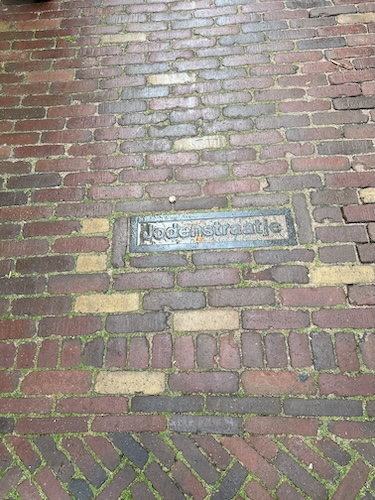
Clear traces of the Jewish presence of yesteryear can be seen in the Jodenstraatje (Jews' little street) and the Synagogesteeg (Synogogue Alley).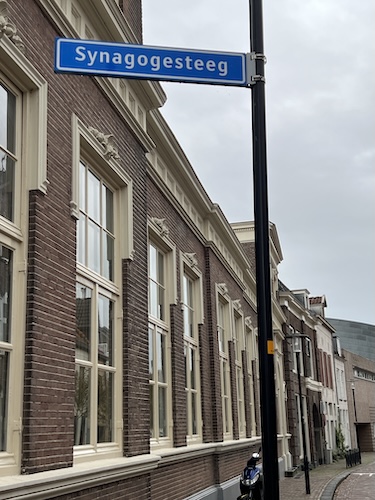
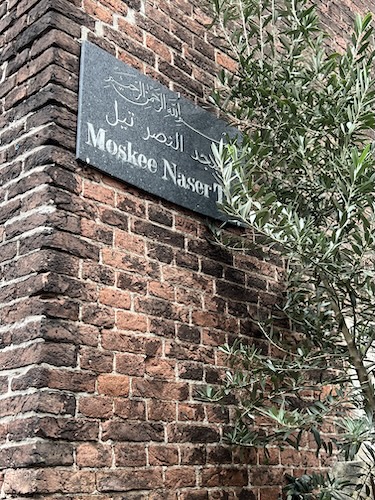
The former synagogue is now a mosque.
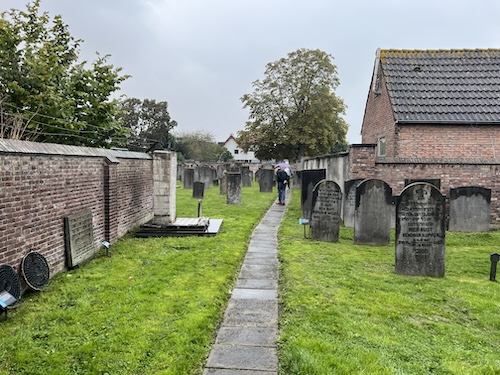
We also visit the Jewish cemetery, which looks very well looked after.
In the funerary chapel, intended for the ritual cleansing of the deceased, we are given a detailed presentation on the funeral rites, which, in the Orthodox community, turn out to be virtually identical to those in the more progressive congregations.
At the end of the day, we have a farewell dinner at a restaurant on the Market Square (once the harbour), accompanied by inspiring conversations. 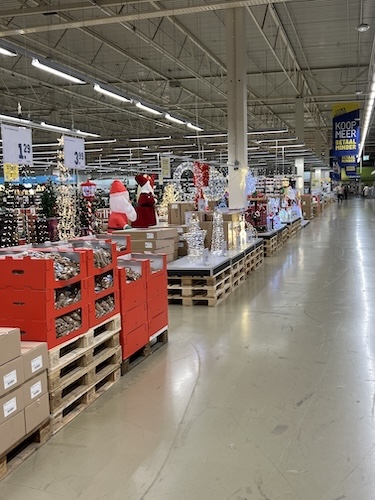
On the way home, we stop off at the Makro self-service wholesale store to buy a few things that are either impossible or very difficult to find in East Frisia.
It’s striking that all the displays are built on pallets and… that Xmas is already in full swing.
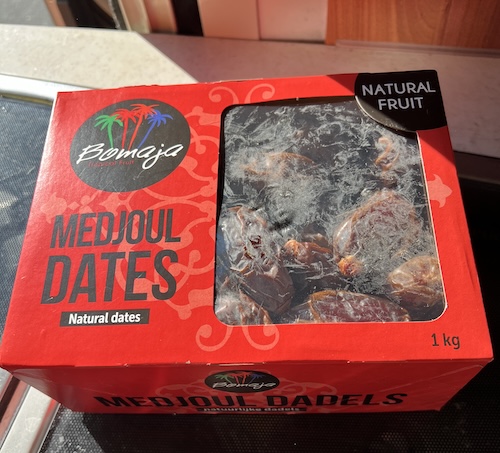
We just can’t resist: we have to take a kilo of Israeli dates home with us.
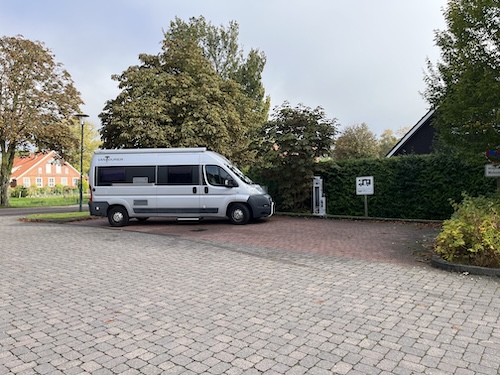
Just another 200 metres to go before we get home, but we pop into the motorhome parking area to empty the toilet cassette first, and then it's time for a drink at home!